
Ben Vogel · 23 October 2026
Shifting Annotation Strategies Reshape Knowledge Curation for Independent Analysts in Fragmented Markets
Independent analysts working across fragmented markets have turned to evolving annotation methods that integrate layered tagging systems with automated cross-referencing protocols, and these approaches allow them to compile scattered datasets into coherent knowledge bases without relying on centralized repositories. Markets that feature numerous small-scale operators and limited dominant players generate data in isolated pockets, so analysts must develop strategies that connect disparate sources through consistent labeling frameworks while maintaining traceability across multiple platforms.
Core Changes in Annotation Techniques
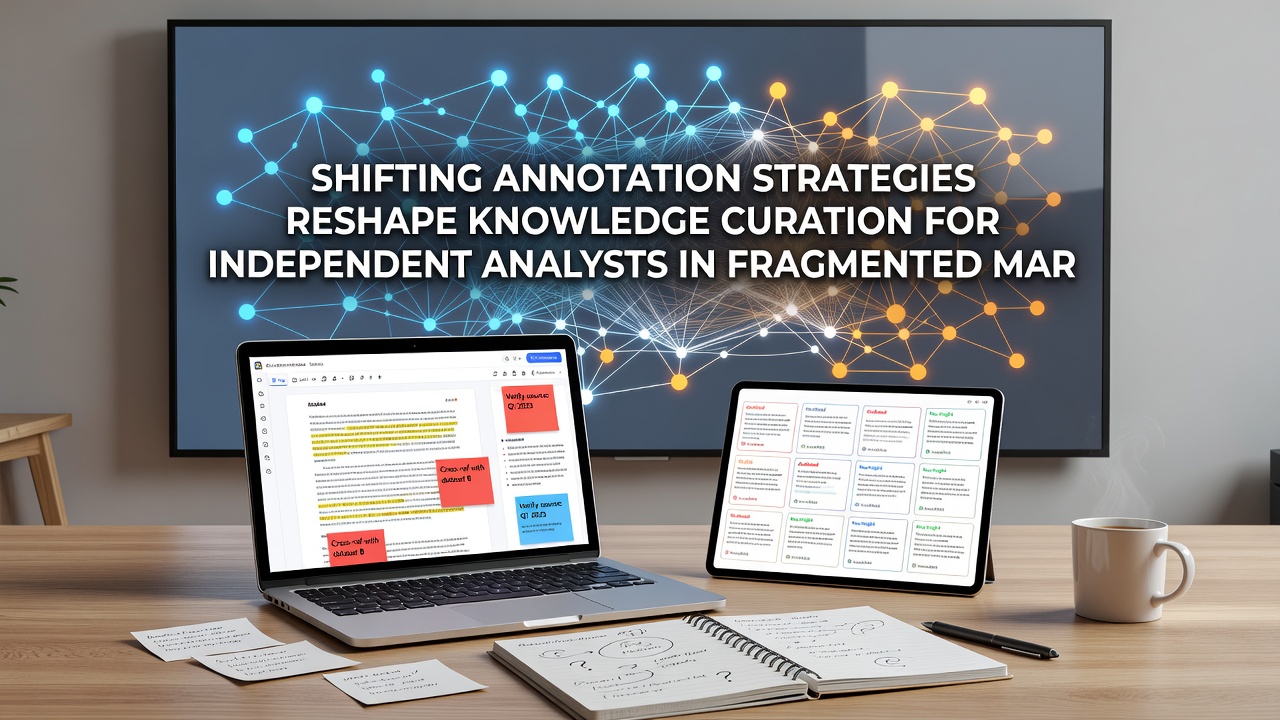
Traditional single-pass labeling has given way to iterative multi-stage annotation cycles that incorporate feedback loops from external validation services, and researchers at various institutions have documented how these cycles reduce inconsistencies in datasets drawn from regional trade publications and niche industry forums. Analysts now embed contextual metadata at the point of initial capture, which enables later queries to retrieve not only raw figures but also the provenance chains that link each data point to its originating transaction record or regulatory filing. This shift supports knowledge curation by allowing solo practitioners to build living documents that update automatically when new annotations flag revisions in source materials.
Effects on Knowledge Curation Processes
Knowledge curation for these analysts involves assembling fragmented signals into actionable insights, and the new annotation strategies accelerate that assembly by supporting collaborative tagging across distributed teams of part-time contributors. Data from multiple studies indicate that analysts who adopt shared annotation schemas can cross-verify market signals from separate geographic zones within hours rather than days, which proves useful in sectors where policy changes or supply disruptions occur without advance notice. In October 2026 several industry reports highlighted increased adoption rates among independent operators who previously relied on manual spreadsheets, noting that structured annotation reduced duplication errors by measurable margins across sampled cases.
One analyst who tracks regional commodity flows discovered that layering temporal and relational tags onto incoming price reports allowed the system to surface anomalies that pointed to unreported inventory shifts, and similar patterns emerged in parallel work involving service pricing in localized consumer markets. These examples illustrate how annotation changes move curation from static archiving toward dynamic synthesis that incorporates real-time adjustments.
Handling Fragmentation Across Sectors
Fragmented markets present unique hurdles because information arrives in incompatible formats from numerous micro-sources, yet annotation frameworks that standardize field definitions while preserving original context help bridge those gaps. Observers note that analysts operating in such environments frequently combine open-source annotation platforms with proprietary rule sets tailored to specific verticals, and this hybrid method maintains compliance with varying disclosure requirements across jurisdictions. According to findings published by the OECD, standardized annotation practices correlate with improved interoperability between datasets collected under differing national reporting regimes.
Another layer of adaptation involves the integration of annotation audit trails that record every edit and contributor, which supports verification when analysts publish curated summaries for subscriber networks. Those who have examined these workflows report that the added transparency reduces disputes over data accuracy, particularly when independent findings influence pricing negotiations or investment decisions in thinly traded segments.
Practical Implementation Patterns
Implementation typically begins with mapping existing data inflows to a core annotation ontology, after which analysts introduce automated suggestions that flag potential mismatches in units or timeframes. Research indicates that gradual rollout across pilot datasets minimizes disruption to ongoing curation activities, and many practitioners extend the same ontology to cover both quantitative metrics and qualitative notes from expert interviews. This consistency allows a single analyst to maintain oversight of multiple market threads without fragmenting attention across incompatible tools.
Conclusion
Annotation strategies continue to evolve as independent analysts refine methods for managing knowledge within fragmented markets, and the resulting curation systems emphasize traceability, adaptability, and cross-source validation. Evidence from ongoing studies shows these practices enable more efficient synthesis of dispersed information while preserving the flexibility that solo operators require. As markets remain segmented, the emphasis on precise annotation frameworks supports sustained analytical capacity without dependence on large institutional resources.